
B is for Becquerel

Hello from a sunny and sweaty Galle. I arrived yesterday afternoon for the Galle Literary Festival from Colombo.
When we first arrived in Colombo a week ago, it rained for three days straight. It’s dry season so it was very hard not to take all the rain personally. I was worried that I may be a secret Rain God like Rob McKenna in So Long and Thanks For All the Fish but then the rain stopped so I guess I am a normal person and it’s just climate change. How thoroughly comforting.
This week we’re looking at the letter B!
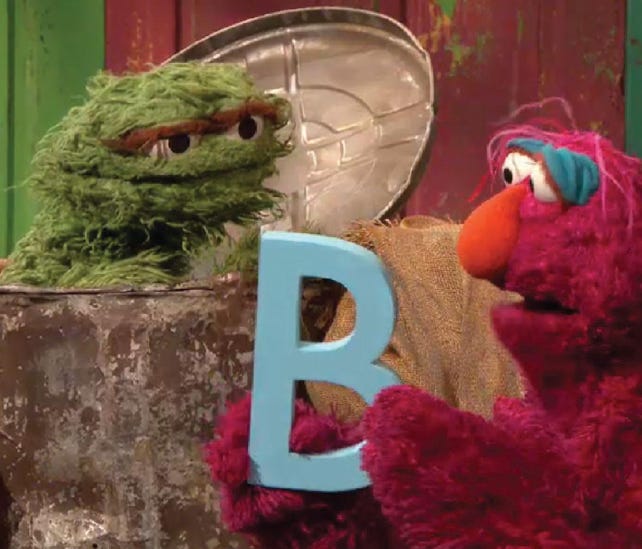
If you missed my last blog, this year I want to see what stories come from using the alphabet as a prompt. So I bought a dictionary to choose a word I don’t know and that is:
becqueral: a unit of radioactivity
Let’s go.
—
I was not a gifted maths or science student. I think in a normal high school I may have had a shot at being smart, but my public high school topped the academic list in the state. Migrants competed over properties to get rentals in the school zone and dobbed each other in if they moved away.
I got mostly A’s but my friends got all A’s. They stayed back after school to go to extension classes to do more maths and science before heading home to study more maths and science. Their minds seemed to work so differently - concepts that took them a few minutes to understand always took me days. Most of them became doctors or engineers.
My ex was an engineer, he had an inherent knowledge of maths and science that I envied. It was so useful - he could do maths in his head to work out bills for group dinners and what things actually cost overseas. And rely on science to be sure that the plane wouldn’t float off in the sky during our flight because gravity stopped working. ‘But what if it happened?’ I’d say looking out the tiny oval plane window with grave suspicion while he wearily tried to again convey that gravity is a universal force that causes acceleration, not something that will run out one day like fuel or common sense.
I always gravitated (ha) to the stories of people, not science or maths. My first question with ‘becqueral’ was not what is radioactivity because I’ve long given up hope of understanding the elements of our universe. All I know for certain is that radioactivity is covered in red flags because you still need a hazmat suit to visit Chernobyl.
My first question was - is becqueral named after a person and if so, why wasn’t it named after the Curies who coined the term radioactivity?
A quick search shows that becquerel is the International System of Units (SI) unit for radioactivity - it measures how many times an unstable atom decays, or disintegrates, per second. My eyes were already threatening to close when I read that it’s named after the man who shared a Nobel Prize in Physics with the Curies for their work in discovering radioactivity. Ah finally - the goss.
Antoine Henri Becquerel accidentally discovered radioactivity in 1896, after he inherited a supply of uranium salts from his father - talk about a strange bequeath, cheers Papa. He was studying how they were affected by light when he realised that this radiation was different from x-rays. For his part, he was given half the Nobel Prize in 1903.
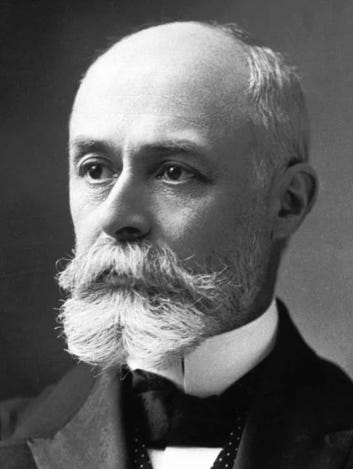
The other half went to the husband and wife team Pierre and Marie Curie. Two years after Henri’s paper, they published about an element they named polonium (in honour of Marie’s birth country Poland) and radium (from ray - the Latin word radius for there is no country named Ray).
The prize was only intended for Pierre and Henri, but someone told Pierre and he kicked up a shitstorm so large that Marie was added. ‘I was working on crystals before this angel obsessed with radioactivity came my way,’ he must have passionately proclaimed in French.
Marie was the first woman to win a Nobel Prize and the only woman to receive it a second time in chemistry in 1911. Pierre didn’t kick a shitstorm the second time - either because he didn’t need to or because he was killed by a horse-drawn cart, three years after they won their prize.
Marie kept kicking science goals till she passed away of Aplastic anemia in 1934, developed through her years of radiation exposure. I remember seeing her journals in lead-lined boxes at the Bibliotheque National in Paris - they will remain radioactive for another 1500 years.
Their daughter, Irene Curie was six when they won the Nobel Prize. If I were her I would have stayed away from both radioactivity research and horse drawn carts. But she is not like me and that’s why she and her husband received the 1935 Nobel Prize in Chemistry for their work in radioactivity.
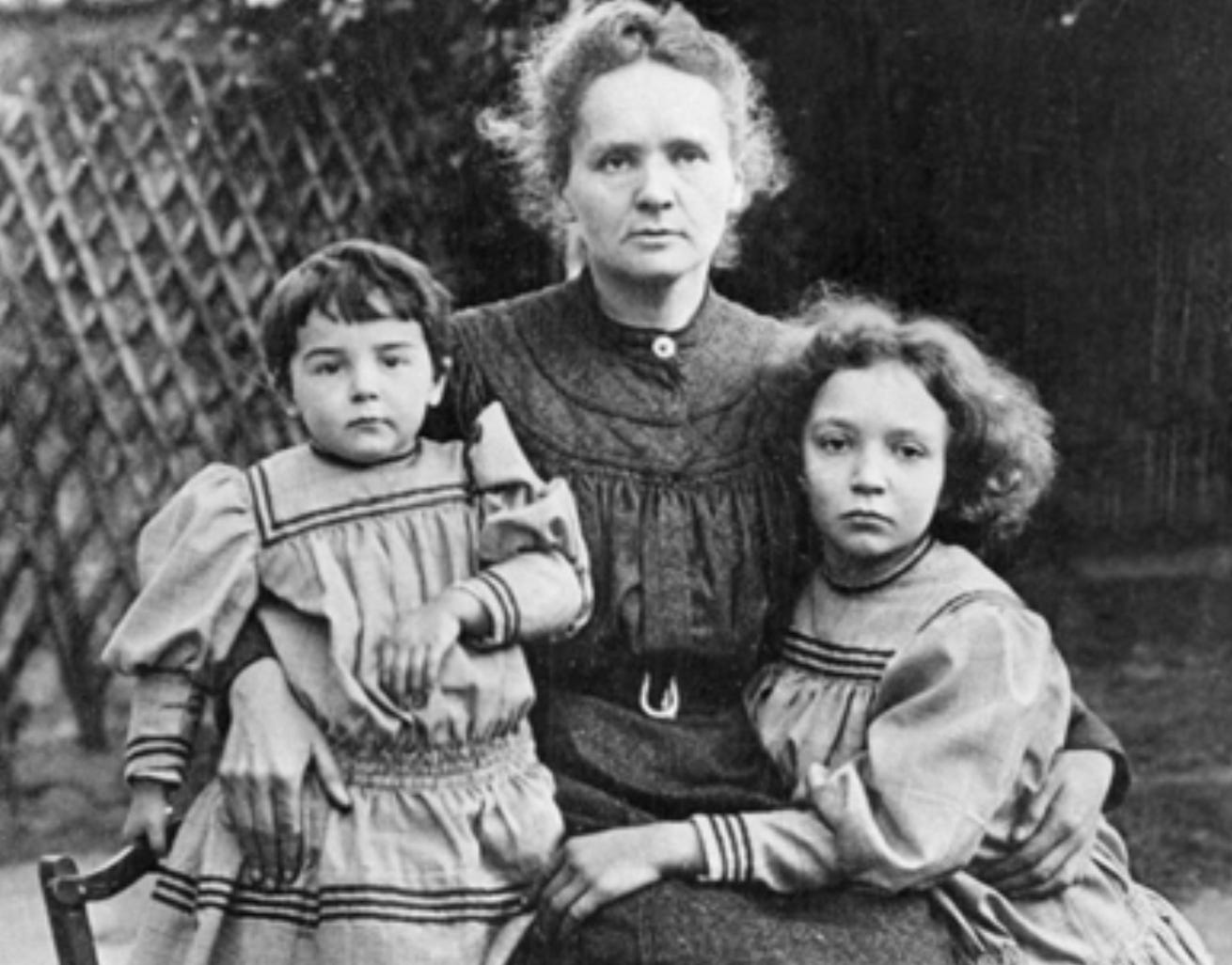
Their second daughter Eve Curie became a writer and wrote the biography Madame Curie about her mother. It made me smile to read about Eve, a writer surrounded by scientists - perhaps her mind worked completely differently to everyone around her too.
It reminded me that there is a place for all of our minds, we just have to find it. Leaning into what lights me up has changed my life - had I not started writing, I wouldn’t be at a literary festival right now. Instead of lamenting that I am a fish that cannot climb a tree, I now swim in the sea.
Still, I can only imagine the conversations around their family dinner table, especially after Eve’s husband also collected a Nobel Prize on behalf of UNICEF in 1965.
And last, to answer my original question, there is a measurement of radioactivity called a curie, but it is a non-SI unit and superseded by a becquerel. The equations work out so that 1 curie is equal to 37 billion becquerels and I’d say that’s about right, goss wise.
—
I hope you’re all well out there, thanks for reading and supporting my work. My panels for the festival start tomorrow and I’m super excited and a tad nervous.
Tickets for my shows in Singapore and Melbourne are on sale and it’ll be going online soon so stay tuned.
Big hugs,
Sashi
This was an enjoyable read with my morning tea, got to laugh and learn a little!! I’m a writer and comedian and math tutor, and when I’m feeling creative I try and combine all three.
Hope you do a show in Toronto sometime!
Thanks for educating us 😊
My mind also doesn't work in a scientific way and I also felt a bit useless about it compared to classmates and friends who could compute in their heads. So this resonates with me.
Greetings from Switzerland 🥳